For ages I’ve wanted to post the removing of a staircase on this blog, because I thought it would be a) interesting
b) informative
c) fun fact
As a background info: the staircase become useless, when we opened a new place for the stairs from the living room. My children didn’t laugh when I was joking that I’m rich person based on “the Fiddler on the Roof”. That’s because in my house there was one staircase going up and another going down, and one staircase didn’t take you anywhere: there was a ceiling on the top 😀
This staircase was built to make it possible to use the attic as a storage. My neighbors told me that previous owners had planned to build a room upstairs, and for that reason the stairs were built like separate from the house, starting from the cold entrance “hall” and going up next to the chimney pipe and had a key in the front door. They even had built that chimney in the way that there could be a small oven or fireplace upstairs. A big advantage for me!
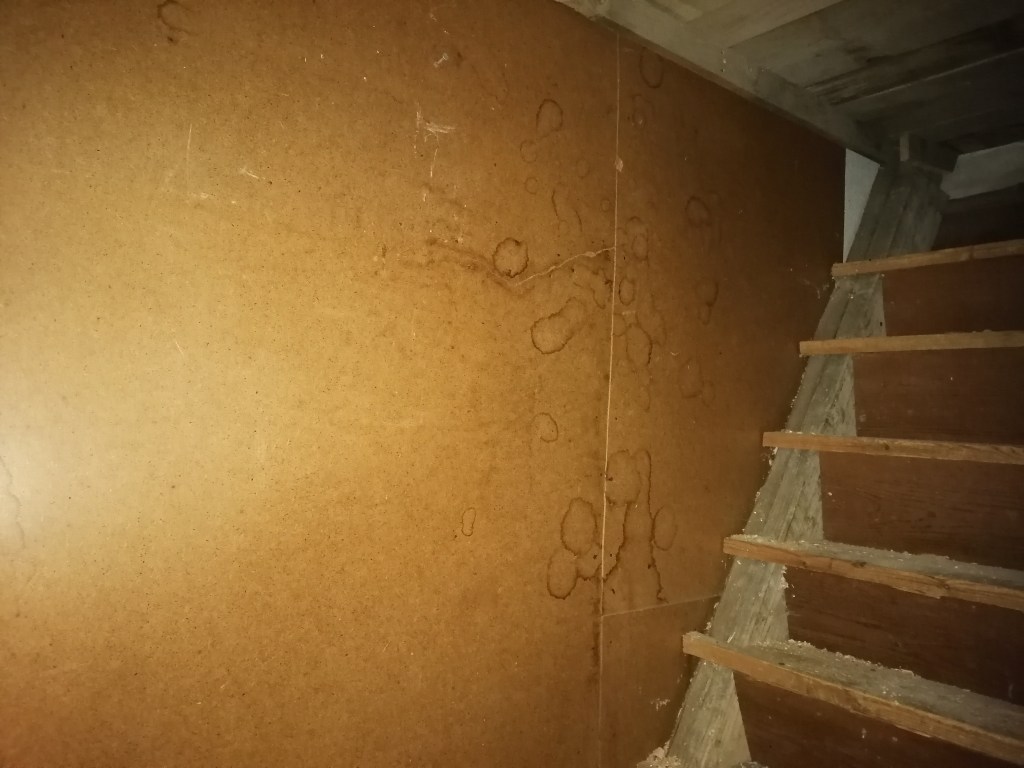
But to be honest those stairs were so well built about 60 years ago! The wood was thick pine wood, nails were strong and big, and there were plenty of them! It was impossible to use saw because of all those nails, but fortunately I have a big crowbar and plenty of determination. Under the stairs there was a small storage place that wasn’t very practical as the door was both narrow and low, and mostly it was just a place of unnecessary or rarely needed items.
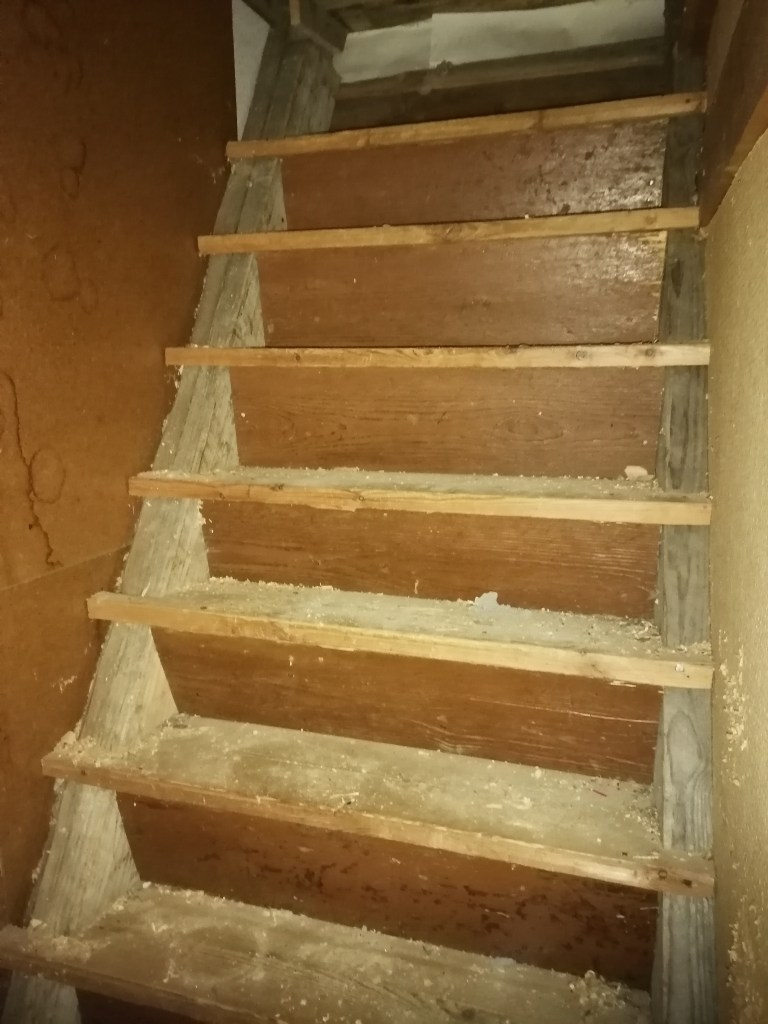
In the left side there’s the inside wall, on the other side of it is the kitchen. That wall is made out of log wood, but as it was usually done in 1950’s and 1960’s, those logs were hidden behind boards. In the left the board is high-density fiberboard type of board, against the logs, and on the right side it was fiberboard both sides of the wall giving to the room.
Most of the work was just physical labor. Some of the wood blocks were attached by several big nails, and especially by the doorways it took muscles to rip them off. In the first picture below you can see some of those blocks with their nails on. And yes, I would have needed new nails after this job! 😀
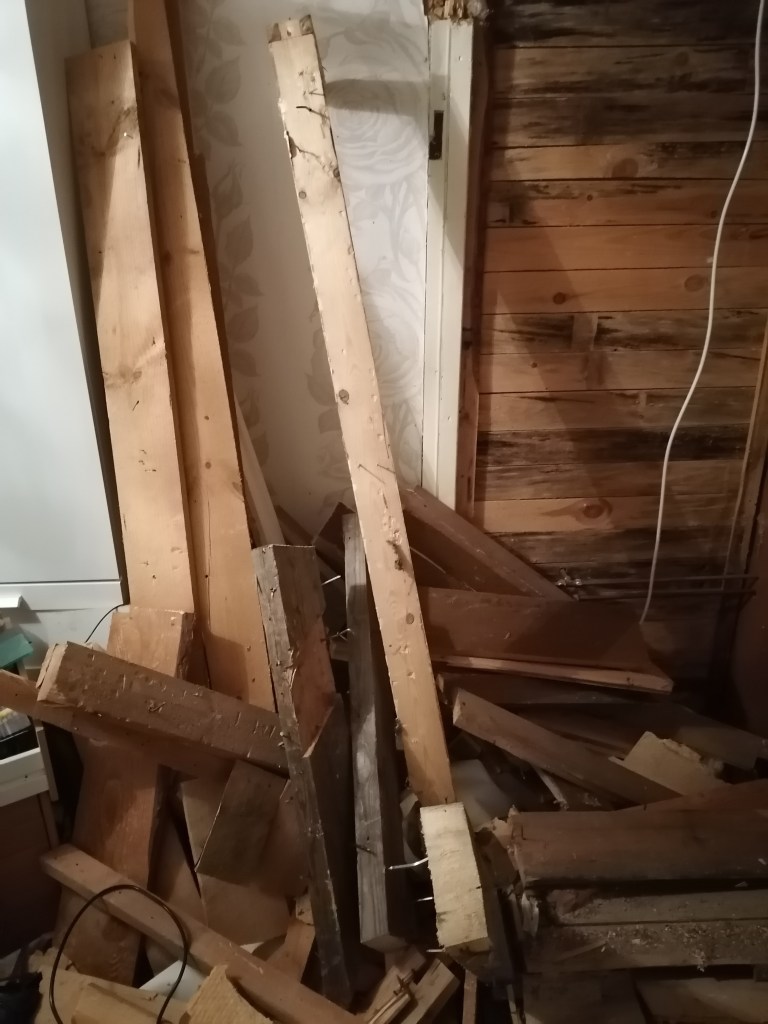
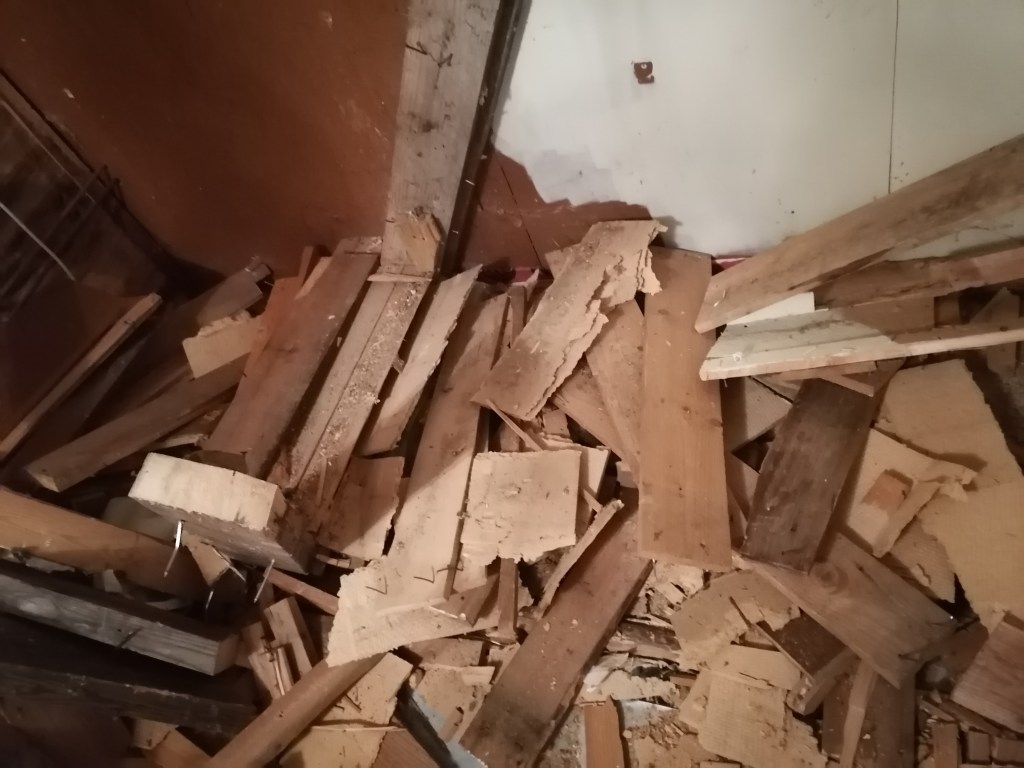
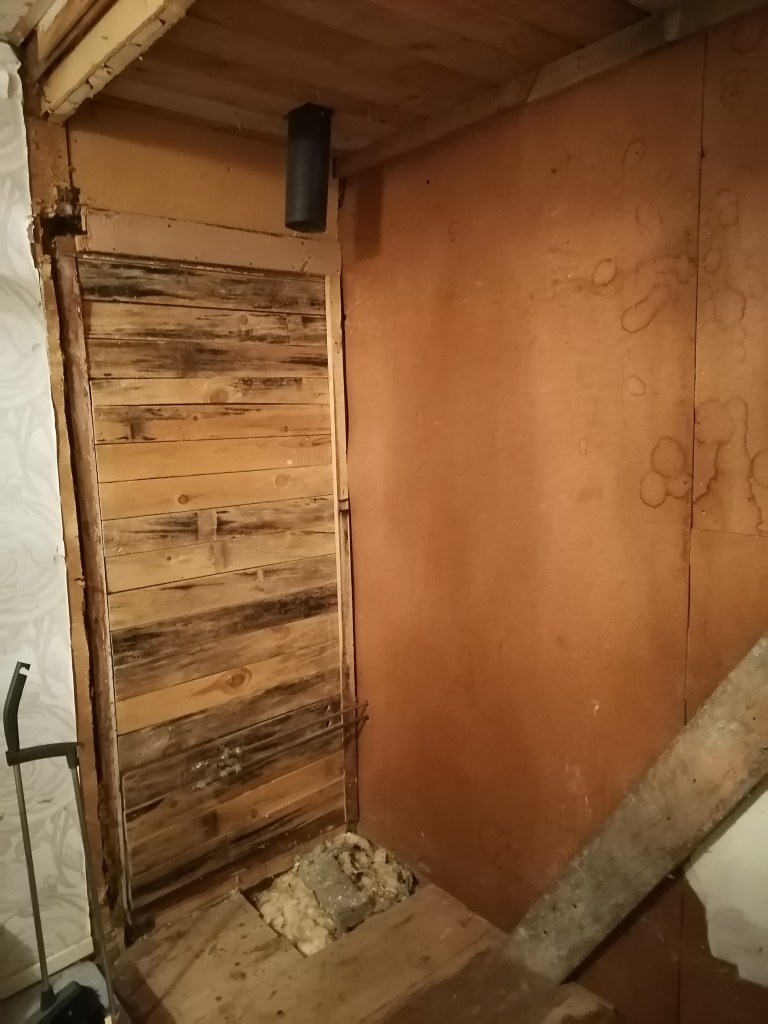
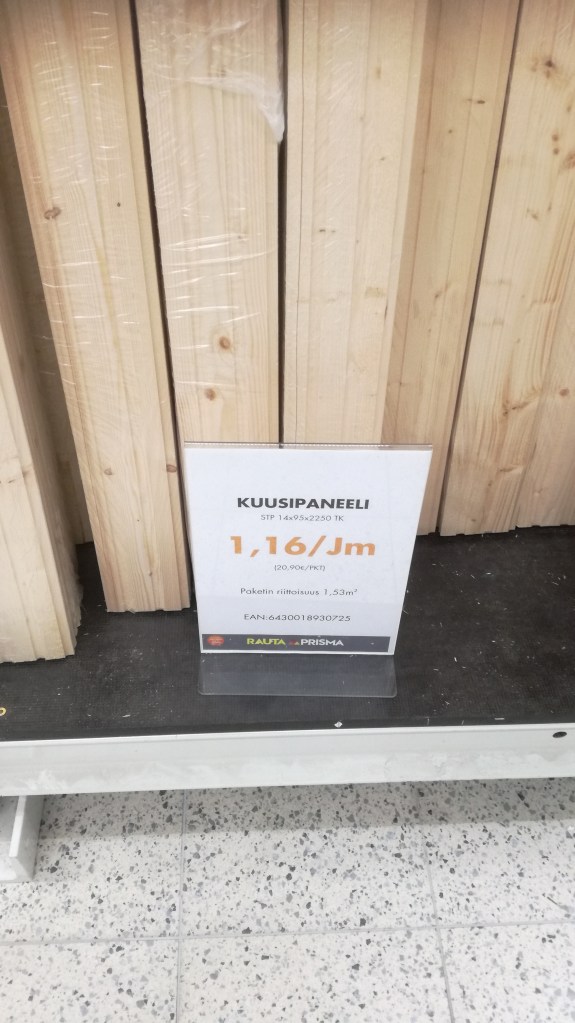
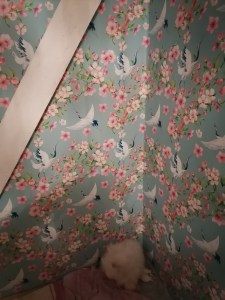
I decided to leave that one piece of wood on the wall, partly because it would need a lot of work to get it off. And partly because I wanted to keep it as a reminder of the former staircase and a cool detail for decorations. In the third picture you can see how I’ve prepared the area for next upstairs project: the water pipes (hot and cold water) are ready to be used for upstairs restroom, the sewage pipe is ready under the floor and the black pipe in the ceiling is the way to get all these water pipes through onto next floor. No need to make holes later on.
Next major phase was to make some kind of floor as the floor in the storage area never existed. The floor down there was just covered with some newspapers, rugs and wool blankets on top of the filling material (wood chips). I have some future plans for this area, so I wanted to make it simple: I used some parquet planks to cover it and give it a nice look. Those were left overs from the flooring of one bedroom upstairs, so the cost was minimal, and they were already available. Besides I like the looks of those planks. Under them will remain the original wooden floor, that was painted brown. Yes, this is a wooden house, originally built in 1926 and has some sturdy logs in the walls.
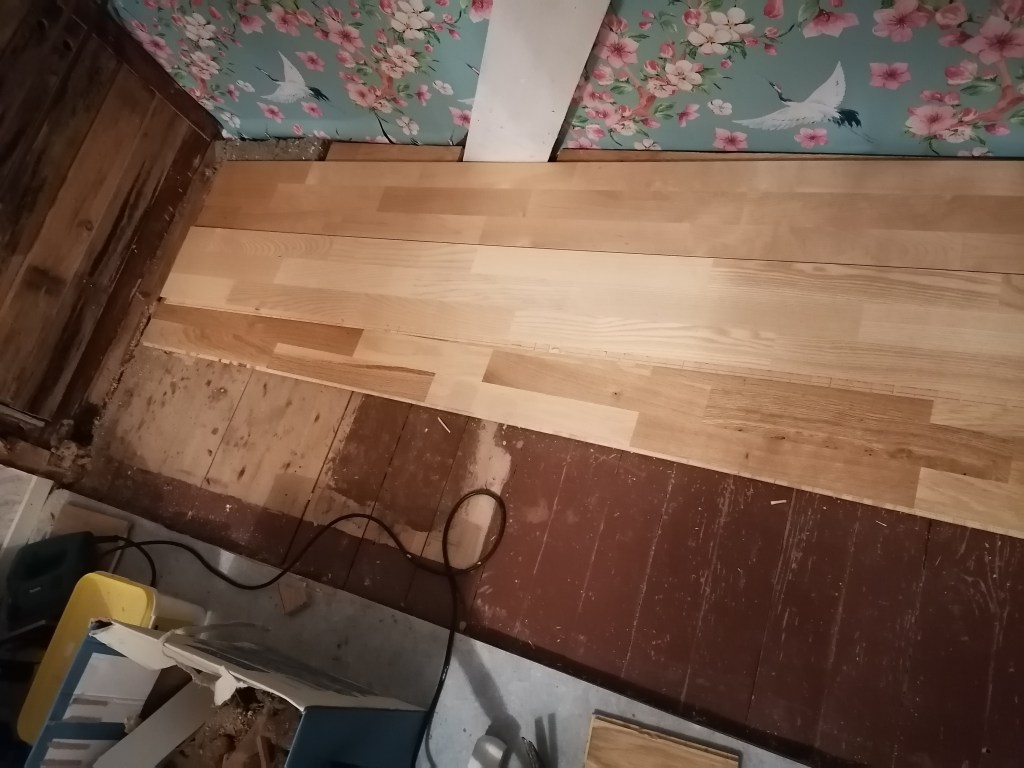
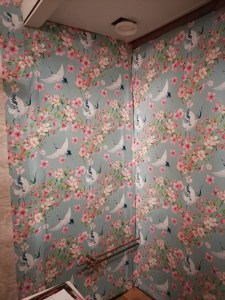
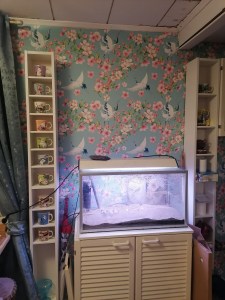
In that picture above you can already see the wallpaper I chose for this room. White cranes with pink cherry flowers somehow touched my heart. The purpose of this room is to be my creative office, and that type of design felt heart warming and uplifting. Half of my children don’t like this wallpaper, but it’s not for their eyes, but for mine. So, I am the one that decides. 😀
This is an example of house maintenance when you are living in a house built hundred years ago. The people who have made it are not among us any more, and materials have changed during the years. Just like modern trends are changing from year to year, in the same way the trends have been there before.
Few years ago I was thinking of different types of houses, and they all have their own pros and cons. I have heard so many times that it’s not affordable to rebuild an old house, just take it down and make a new one. But I happen to love old wooden houses. I get a feeling that they are live and breathing, unlike modern stone houses. In a warm place I’d like those hard stone houses as they may remain cool under the hot sun, but in here, in the cold, these wooden houses provide natural insulation. Yes, they don’t last forever without maintenance, but you can always replace parts that are getting bad due to water leakage or ants or rats or what ever cause.
One big pro in my mind that these old wood log houses have, it is the possibility of recycling. People have been doing it for ages, and the logs from the old house have been re-used for another building. And those that were not good enough, they can be burnt as a firewood. Originally these log houses had no paint on them, and only quite late people started to paint them (most likely because they got wealthier) and first paints were Falu reds that gets washed away during years. In case you don’t know about this paint, the paint consists of water, rye flour, linseed oil, silicates, iron oxides, copper compounds, and zinc. It’s color may be different depending on the degree to which the oxide is burnt, ranging from almost black to a bright, light red, and this type of paint is traditional one in Nordics.
As an example of this kind of recycling of materials I can give the house of my grandparents. They had the floor in their living room made out of planks that used to be the walls of a granary. In that way valuable hard wood can be re-used, and save some money too. And no fear of chemicals like it is with these man made materials. I think I need to leave the lecture of recycling of construction materials out from this post, there are too many details with it, starting with rock materials all the way to plywood and laminates.
This was just a small project, but thanks to removal of the stairs, I got over 2 m2 of usable area into a small room. It’s also a good example how the house can evolve during the years: the family grows and more space is needed, then children move out and there’s possibility to use the space into new activities. Many of these small projects don’t even need any kind of licence or permit, because it’s not affecting the outside of the house or change the total area of the house. By ripping of something that is not needed any longer, you may create a better functioning space and make it easier to clean, for example.
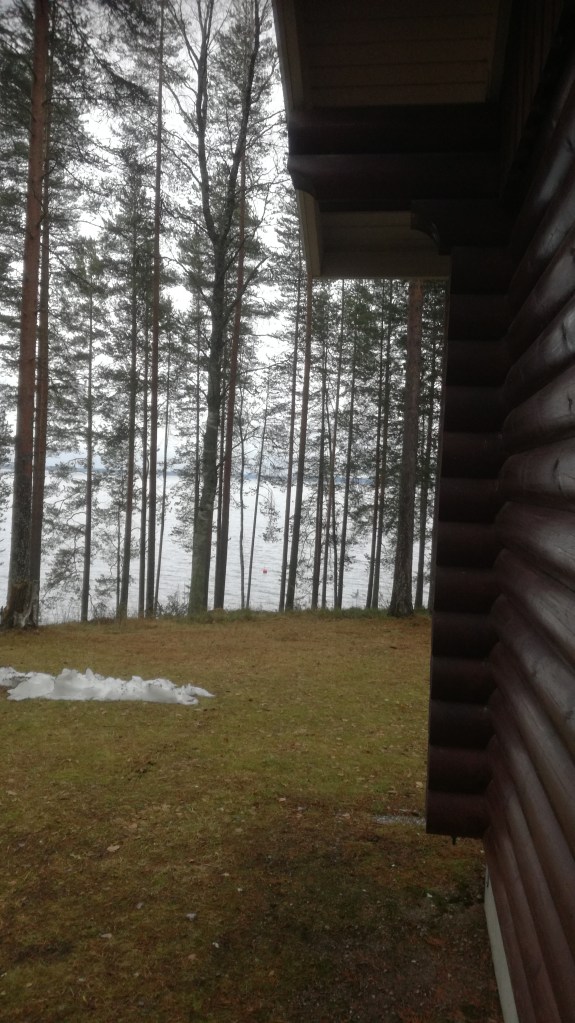
I have documented so many other building projects around this house and farm, and if you are willing to hear about those, just leave a comment. And if there’s specific type of thing, just let me know. Building in this cold area is very different from many other places, as the buildings must stand from -40 C to +40 C, rain and wind, and keep us warm and safe. We don’t have earthquakes or tornadoes in here, but these traditional log houses could stand in those disasters too because of their structure.
With love
Joana
 Home and travel with Joana Millet
Leave a comment